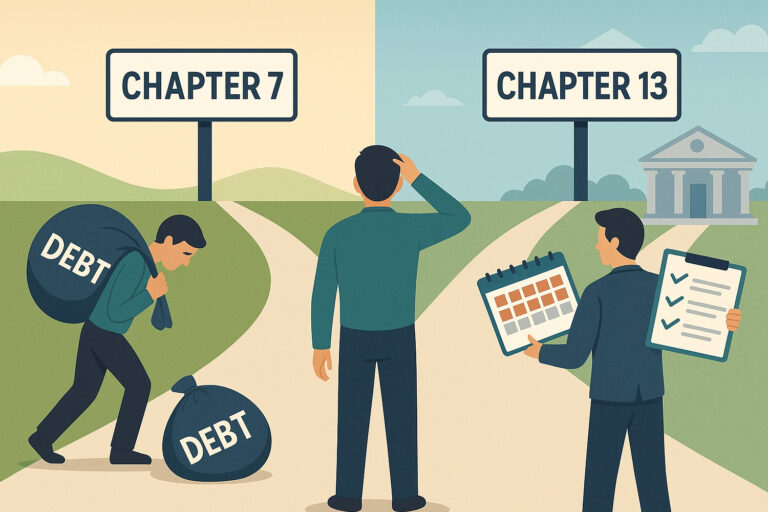
When financial challenges become overwhelming, bankruptcy can offer a fresh start. At United Legal Advocates, we understand that deciding between Chapter 7 and Chapter 13 bankruptcy is a critical choice that depends on your unique financial situation. As the premier bankruptcy law firm in the USA, we’re here to guide you through this decision with clarity and expertise. This guide will break down the differences between Chapter 7 and Chapter 13, helping you determine the best path forward while addressing key considerations for your financial future.
Understanding Chapter 7 Bankruptcy: A Fresh Start Through Liquidation
Chapter 7 bankruptcy, often referred to as “liquidation bankruptcy,” is designed for individuals or families with limited income and significant unsecured debts, such as credit card balances, medical bills, or personal loans. This process involves protecting exempt assets, with the goal of discharging most remaining debts, providing a clean financial slate.
Key Features of Chapter 7:
- Fast Process: Chapter 7 typically takes 4-6 months to complete, making it an efficient option for those seeking quick debt relief.
- Asset Liquidation: Non-exempt assets may be sold by a bankruptcy trustee to repay creditors. However, this is not common. Most filers keep all their assets thanks to state and federal exemptions. Plus, we will advise you any and all risks before you decide to file for Chapter 7 bankruptcy.
- Eligibility: To qualify, you must pass the means test, which compares your income to the median income in your state. If your income is too high, Chapter 13 may be a better fit.
- Debt Discharge: Most unsecured debts are eliminated, though certain obligations like child support, or recent taxes are non-dischargeable.
Chapter 7 is ideal for those with minimal disposable income and few valuable assets, offering a rapid path to debt freedom. However, it’s not a one-size-fits-all solution, and consulting with United Legal Advocates can ensure this option aligns with your goals.
Exploring Chapter 13 Bankruptcy: A Structured Repayment Plan
Chapter 13 bankruptcy, known as the “wage earner’s plan,” is tailored for individuals with disposable income who want to retain their assets while repaying debts over time. This chapter allows you to create a 3 to 5-year repayment plan, consolidating your debts into manageable monthly payments. Chapter 13 may also give you the ability to discharge 100% of your unsecured dischargeable debts.
Key Features of Chapter 13:
- Asset Protection: Chapter 13 lets you keep your property, including non-exempt assets, as long as you adhere to the repayment plan.
- Flexible Repayment: Your plan is based on your income, expenses, and debt types, prioritizing secured debts (e.g., mortgages or car loans) while addressing unsecured debts.
- Debt Limits: Chapter 13 has specific debt caps (e.g., $2,750,000 for secured debts and $465,275 for unsecured debts as of 2025), so high-debt individuals may need alternative solutions.
- Foreclosure Prevention: If you’re behind on mortgage or Homeowner’s Association (HOA) payments, Chapter 13 can halt foreclosure proceedings and allow you to catch up over time.
Chapter 13 suits those with disposable income who want to protect their home, car, or other assets while restructuring their debts. It’s a powerful tool for financial recovery, but it requires commitment to the repayment plan.
Chapter 7 vs. Chapter 13: Which Is Right for You?
Choosing between Chapter 7 and Chapter 13 depends on your income, assets, debts, and financial goals. Here’s a detailed comparison to help you decide:
1. Income and Eligibility
- Chapter 7: Best for low-income individuals who pass the means test. If your income exceeds the state median, you may not qualify.
- Chapter 13: Ideal for those with a disposable income sufficient to cover living expenses and contribute to a repayment plan.
2. Asset Retention
- Chapter 7: Exemptions are generous, allowing individuals to retain all exempt assets, yet still discharge eligible debts.
- Chapter 13: Allows you to stop foreclosures, repay debts over an extended period of time, often with little to no interest or possibly discharge certain unsecured debts in their entirety.
3. Debt Types
- Chapter 7: Focuses on discharging unsecured debts but doesn’t address secured debts like mortgages unless you surrender the collateral.
- Chapter 13: Allows you to restructure both secured and unsecured debts, making it suitable for catching up on missed payments.
4. Timeline and Commitment
- Chapter 7: Offers quick relief, typically within months.
- Chapter 13: Requires a 3 to 5-year commitment, demanding financial discipline.
5. Long-Term Impact
- Chapter 7: May stay on your credit report for 10 years but provides a faster fresh start. Neverthelss, at United Legal Advocates, we will provide you with the tools and information needed to rebuild your credit quickly. It is possible to have a credit score over 700 after just one year of receiving your bankruptcy discharge.
- Chapter 13: Remains on your credit report for 7 years but demonstrates a commitment to repaying debts, which may appeal to future lenders.
Why Choose United Legal Advocates?
At United Legal Advocates, we pride ourselves on offering personalized guidance to help you navigate Chapter 7 or Chapter 13 with confidence. Our experienced attorneys will:
- Conduct a thorough financial analysis to recommend the best chapter for your needs.
- Maximize exemptions to protect your assets.
- Guide you through the means test, repayment plan creation, and court processes.
- Provide ongoing support to ensure a smooth bankruptcy journey.
Take the First Step Toward Financial Freedom
Deciding between Chapter 7 and Chapter 13 is a pivotal step toward reclaiming your financial stability. Whether you need the swift relief of Chapter 7 or the structured repayment of Chapter 13, United Legal Advocates is here to help. Contact us today for a free consultation and let our expert team craft a bankruptcy strategy tailored to your unique circumstances.